

Blog
Best Kitchen Products on Amazon in 2026: 8 Tools Worth Buying
This post contains Amazon affiliate links. If you buy through them, we may earn a small…
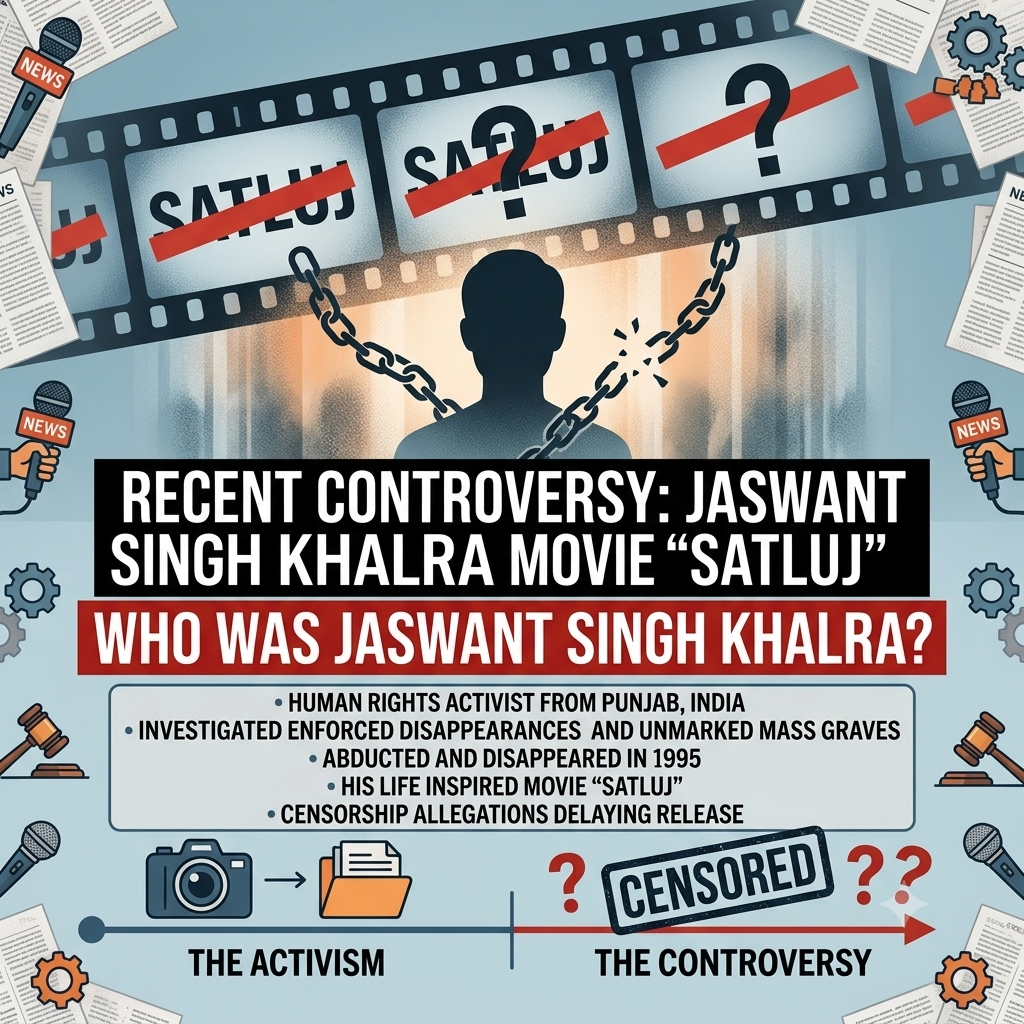
A film based on the life of a little-known human rights activist just became one of the most talked-about controversies in Indian entertainment. Satluj, starring Diljit Dosanjh, was pulled from ZEE5 in India less than 48 hours after its release — reigniting interest in the man at the center of it: Jaswant Singh Khalra.
Here’s the full story — both who Khalra actually was, and what’s happening with the film today.
Satluj (originally titled Ghallughara, then Punjab ’95) is a biographical drama about Khalra’s investigation into enforced disappearances in Punjab during the state’s militancy years, with Diljit Dosanjh playing Khalra. The film had an unusually long road to release:
The government’s stated reason: According to officials at India’s Ministry of Information and Broadcasting (I&B), Satluj was released without the certification required for release, and its makers allegedly bypassed the proper process by changing the title and releasing it as an OTT release instead. The Ministry also alleged this violated IT Rules, though it reportedly did not specify which provision.
The other side: The film’s supporters — including Sikh community organizations, several public figures, and Dosanjh himself — have pushed back, framing the takedown as an attempt to suppress a true story about state accountability. The Delhi Sikh Gurudwara Management Committee (DSGMC) publicly condemned the removal and encouraged Gurdwaras, schools, and colleges across Delhi to screen the film independently and hold seminars on Khalra’s life. Dosanjh posted a message on Instagram after the takedown, and pirated copies of the film spread online within hours of its removal — a sign of how much public attention the story had already gathered.
It’s worth noting this is a rapidly developing story, and both the legal dispute and public reaction are still unfolding as of this writing.
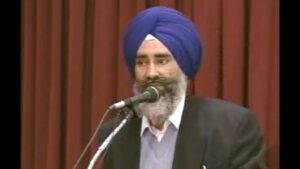
Strip away the film controversy, and there’s a real, remarkable — and largely under-told — story here.
Early life: Khalra was born in 1952 in Khalra village, Amritsar district, Punjab. He worked as a bank manager and later became the General Secretary of the Human Rights Wing of the Shiromani Akali Dal, a Sikh political party.
The context: In June 1984, the Indian Army conducted Operation Blue Star, a military action against militants inside the Golden Temple complex in Amritsar. Later that year, Prime Minister Indira Gandhi was assassinated by her own bodyguards, followed by the 1984 anti-Sikh riots in which thousands of Sikhs were killed. In the years that followed, Punjab entered a period of militancy and counter-insurgency, during which police were given sweeping powers to detain people as suspected terrorists.
The investigation: While searching for missing colleagues, Khalra began digging through municipal cremation records in Amritsar. What he found were official documents listing names, ages, and addresses of people who had been secretly cremated by police as “unidentified” bodies — despite many having known identities and families still searching for them. His research eventually extended to other Punjab districts, and he concluded that police had carried out mass, unauthorized cremations to cover up custodial killings during the insurgency years.
The scale of what he documented was staggering: Khalra’s investigation identified thousands of illegal cremations, and he publicly estimated that as many as 25,000 people may have been killed and secretly cremated across Punjab during this period. A later Central Bureau of Investigation (CBI) inquiry independently found that police had unlawfully cremated over 2,000 people in Tarn Taran district alone. The Supreme Court of India and the National Human Rights Commission both later acknowledged the validity of parts of this data.
Taking it to the world: Khalra didn’t just publish his findings quietly — he presented them to national and international human rights forums, including a trip to Canada in mid-1995, where he spoke at a parliamentary event hosted by the World Sikh Organization about what he’d uncovered. Those who hosted him during that trip later said he seemed to know the risk he was taking, but felt he couldn’t do the work from outside Punjab.
His abduction and murder: On September 6, 1995, Khalra was abducted from outside his home in Amritsar. He was held, reportedly tortured, and ultimately killed roughly seven weeks later, on October 27, 1995. For years, his fate remained unconfirmed until a former police officer’s testimony helped establish what had happened to him.
Accountability, eventually: In 1996, the CBI concluded that Khalra had been held in police custody before being killed, and recommended prosecuting nine police officials. In 2005, six officers were convicted and sentenced to seven years in prison. In 2007, the Punjab and Haryana High Court enhanced the sentence for four of the convicted officers to life imprisonment. It remains one of the few cases from that period where police officials were actually held criminally accountable.
His legacy: Khalra is remembered today as Shaheed (“martyr”) Jaswant Singh Khalra. His wife, Paramjit Kaur Khalra, continued advocating for justice and awareness long after his death. In 2013, Canada’s New Democratic Party passed a resolution calling on the Canadian government to formally recognize his work. Decades later, his case is still cited in discussions of human rights, enforced disappearances, and state accountability in India.
Whatever the outcome of the certification dispute over Satluj, the renewed attention on Khalra’s story is arguably the most significant part of this news cycle. A man who spent his final years documenting the deaths of people the system had tried to erase from record is, thirty years later, at the center of a national conversation again — this time about whether his story itself can be told on screen.
Comparisons have already been drawn in the press between Satluj‘s treatment and other politically charged Indian films that remain available on the same streaming platforms without similar takedowns — a point critics have raised as evidence of inconsistency, while officials maintain the issue is strictly procedural (certification, not content). Readers can weigh both explanations for themselves as the story develops.
This post contains Amazon affiliate links. If you buy through them, we may earn a small…